1500 Medical Center Parkway Murfreesboro, TN 37129
 info@prymeexteriors.com



Introduction: The Evolving Landscape of Residential and Commercial Roofing
In the contemporary real estate and property management sector, the roof is often viewed through two distinct lenses: as a structural component to be maintained and as an insured asset to be protected. However, the most successful property owners understand that these two perspectives are not mutually exclusive; rather, they are deeply interdependent. The title of our exploration, Insurance Claims vs. Preventive Maintenance: Why You Need Both, highlights a critical synergy required to preserve property value and ensure long-term financial stability. As climate patterns become increasingly volatile, with a documented rise in high-velocity wind events and localized hailstorms, the roofing industry has seen a paradigm shift. Insurance carriers are tightening their underwriting guidelines, increasing deductibles, and scrutinizing claims with unprecedented rigor. Simultaneously, the cost of raw materials—such as asphalt shingles, TPO membranes, and metal panels—has fluctuated, making full roof replacements a significant capital expenditure. In this environment, relying solely on insurance to cover roofing needs is a high-risk strategy, while ignoring the claim process during a catastrophic event is equally negligent. This article provides a deep-dive into why a dual-pronged approach is the only sustainable way to manage your roofing system.
Understanding the Insurance Claim Mechanism
To understand why maintenance is necessary, one must first understand the specific, narrow scope of property insurance. Most standard HO3 or commercial property policies are designed to cover sudden and accidental damage. This includes events like a tree falling on a roof, a lightning strike, or a severe hailstorm that compromises the integrity of the shingles. Insurance is fundamentally a risk-transfer mechanism for catastrophic loss, not a maintenance fund.
What Qualifies as a Covered Peril?
Insurance adjusters look for specific evidence of damage caused by a covered peril. For instance, in a wind claim, the adjuster is looking for creased, broken, or missing shingles that occurred during a specific weather event documented by meteorological data. In a hail claim, they look for impact marks that have fractured the fiberglass mat of the shingle. If the roof is leaking because the sealant around a pipe boot has cracked due to age and UV exposure, this is generally not a covered claim. This is classified as wear and tear or neglect, and it is the primary reason many claims are denied.
The Limitations of Replacement Cost Value (RCV) vs. Actual Cash Value (ACV)
Property owners must also navigate the nuances of their specific policy. An RCV policy covers the cost to replace the roof at today’s market prices, minus the deductible. However, many older roofs are being moved to ACV schedules, where the insurer only pays the depreciated value of the roof. If a 20-year-old roof with a 25-year lifespan is destroyed, an ACV policy might only pay 20% of the replacement cost. This financial gap is where preventive maintenance becomes a financial lifesaver, as it ensures the roof reaches its maximum possible lifespan before a claim or replacement is necessary.
The Strategic Value of Preventive Maintenance
Preventive maintenance is the proactive practice of inspecting and servicing a roofing system to prevent minor issues from escalating into structural failures. While an insurance claim is a reactive response to an external event, maintenance is a controlled, internal strategy to manage the asset’s lifecycle.
Extending the Service Life of Your Roof
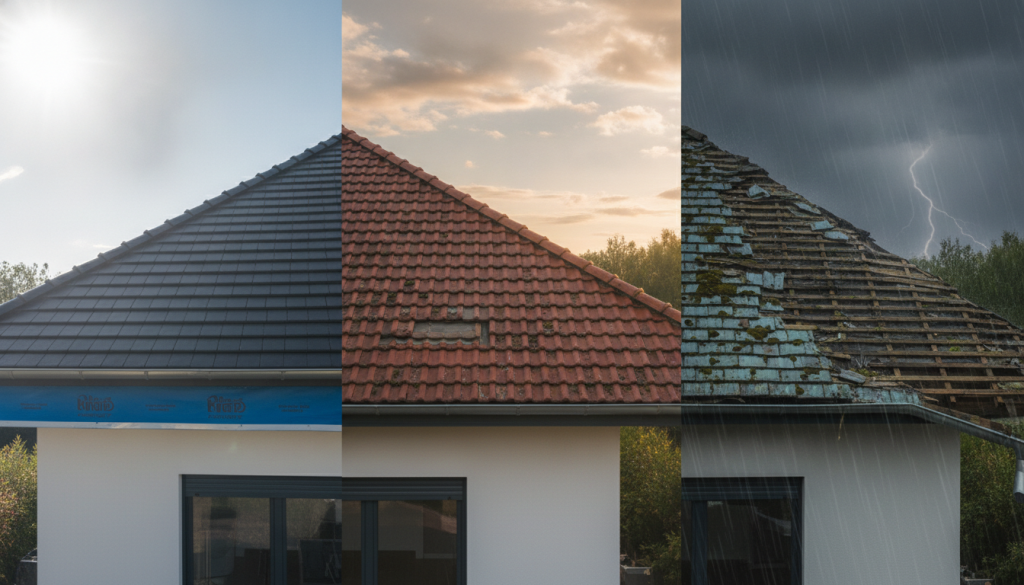
The average asphalt shingle roof is designed to last 20 to 30 years, but without maintenance, many fail between year 12 and 15. Maintenance tasks such as removing debris (which traps moisture), cleaning gutters (to prevent ice damming), and resealing flashing can add 5 to 10 years to a roof’s life. This extension of the replacement cycle significantly improves the Return on Investment (ROI) for the property owner. For a commercial building with a TPO or EPDM roof, regular inspections can identify membrane punctures or seam failures that, if caught early, cost hundreds of dollars to patch but, if ignored, can lead to thousands of dollars in mold remediation and insulation replacement.
Mitigating Secondary Damage to the Building Envelope
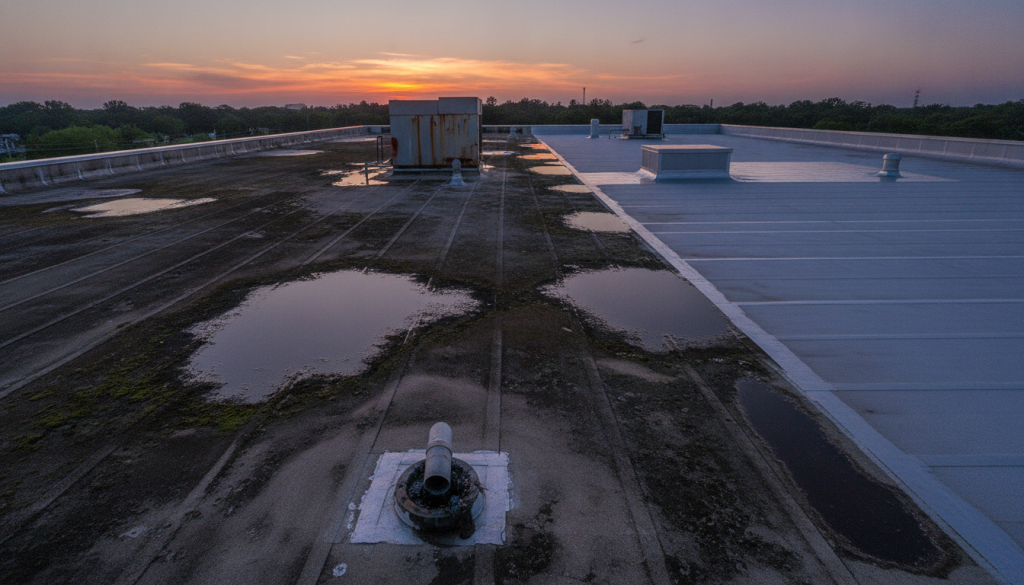
A roof leak is rarely just a roof problem. By the time water stains appear on a ceiling, the water has likely already traveled through attic insulation, saturated wooden rafters, and potentially reached electrical conduits. Preventive maintenance identifies the ‘silent leaks’—the small penetrations that don’t cause a flood but cause rot and mold over time. By maintaining the roof, you are protecting the entire building envelope, including the structural integrity of the walls and the health of the occupants.
Comparative Analysis: Reactive vs. Proactive Management
To visualize the difference between these two strategies, consider the following data comparing a reactive approach (waiting for a claim) versus a proactive approach (maintenance + claims).
| Feature | Reactive Strategy (Insurance Only) | Proactive Strategy (Maintenance + Claims) |
|---|---|---|
| Average Roof Lifespan | 12-15 Years | 22-28 Years |
| Out-of-Pocket Repair Costs | High (Emergency Rates) | Low (Scheduled Maintenance) |
| Claim Approval Probability | Low (Often denied for neglect) | High (Documented care) |
| Secondary Damage Risk | High (Mold, Rot, Interior) | Minimal (Early detection) |
| Deductible Exposure | Frequent (Every storm) | Strategic (Only for major events) |
How Preventive Maintenance Strengthens Your Insurance Claim
One of the most overlooked benefits of preventive maintenance is how it functions as an ‘insurance policy for your insurance.’ When a major storm hits and you file a claim, the burden of proof is often on the policyholder to show that the damage was caused by the storm and not by pre-existing neglect.
Establishing a Documentation Trail
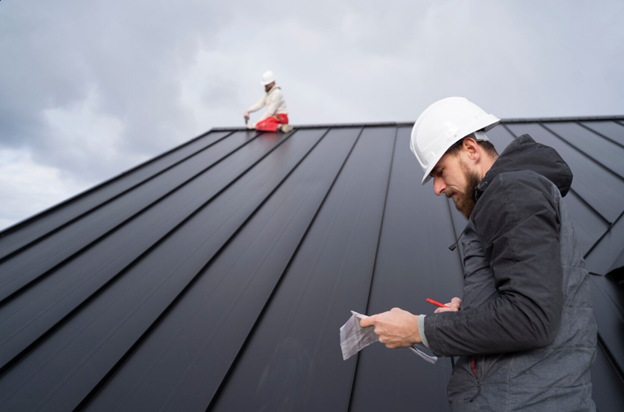
If you have a professional roofing contractor perform an annual or bi-annual inspection, you possess a digital paper trail of the roof’s condition. If an inspection report from June shows the roof was in excellent condition, and a hailstorm occurs in August, the insurance company cannot easily claim the damage was ‘pre-existing.’ This documentation is the strongest tool a property owner has during a claim dispute.
Proving ‘Duty of Care’ to the Adjuster
Insurance policies often contain a clause regarding the ‘insured’s duties after a loss,’ which includes mitigating further damage. A well-maintained roof demonstrates to the adjuster that the property owner has exercised a ‘duty of care.’ Adjusters are generally more favorable toward owners who show they have invested in their property, as it suggests that any reported damage is legitimately caused by the peril in question rather than a lack of upkeep.
Technical Components of a Robust Maintenance Program
A comprehensive maintenance program goes beyond a simple visual check from the ground. It requires a detailed technical assessment of several key components.
Flashing Integrity and Sealant Longevity
Flashing—the metal material used to redirect water away from areas where the roof plane meets a vertical surface (like a chimney or wall)—is the most common point of failure. Over time, thermal expansion and contraction cause flashing to pull away and sealants to crack. Maintenance involves checking these transition points and reapplying high-grade polyurethanes or silicones to ensure a watertight seal.
Drainage Systems and Gutter Efficiency
Gutters and downspouts are the ‘arteries’ of the roofing system. When they are clogged with leaves or granules, water backs up under the eave’s starter shingles, leading to fascia rot and ice dams in colder climates. A maintenance plan ensures that water is moved efficiently off the roof and away from the foundation.
Ventilation and Attic Climate Control
A roof is a system that includes the space beneath it. Improper attic ventilation leads to excessive heat buildup in the summer, which ‘bakes’ the shingles from the inside out, causing premature granule loss and curling. In the winter, poor ventilation leads to moisture buildup and mold. Maintenance includes checking that soffit, ridge, and gable vents are unobstructed.
Seasonal Roofing Maintenance Checklist
To maintain a roof effectively, property owners should follow a seasonal cadence. Spring: Inspect for winter damage, such as shingle cracking from freeze-thaw cycles and clearing debris from spring blossoms. Summer: Check for UV damage and heat-related blistering. Fall: This is the most critical time for gutter cleaning and preparing the roof for snow loads or high winds. Winter: Monitor for ice dams and ensure that heavy snow accumulation is not stressing the structural members.
Frequently Asked Questions
1. Will my insurance pay for a roof that is just old?
No. Insurance covers damage from specific events like wind, hail, or fire. It does not cover a roof that has reached the end of its natural life due to age. This is why saving for a replacement through maintenance-extended years is vital.
2. How often should I have my roof professionally inspected?
Most industry experts recommend a professional inspection at least twice a year—ideally in the spring and fall—and after any major weather event that produces high winds or hail.
3. Can I do my own preventive maintenance?
While homeowners can perform basic tasks like cleaning gutters at ground level, professional roofing contractors have the safety equipment and technical expertise to identify subtle issues like ‘bruised’ shingles or failing flashing that an untrained eye might miss.
4. Does a maintenance plan guarantee my insurance claim will be approved?
No plan can guarantee approval, but a maintenance plan significantly increases your chances by providing clear evidence of the roof’s prior condition and proving that you have not been negligent in your responsibilities as a policyholder.
5. Is a maintenance contract worth the cost?
Yes. The cost of an annual maintenance contract is typically a fraction of the cost of a single leak repair or the thousands of dollars lost when an insurance claim is denied due to lack of maintenance.
Conclusion: The Synergy of Protection
The debate of Insurance Claims vs. Preventive Maintenance should not be framed as an ‘either-or’ scenario. Instead, they should be viewed as two halves of a comprehensive risk management strategy. Preventive maintenance ensures the daily health and longevity of the roofing system, protecting the building from the elements and the owner from unnecessary expenses. Insurance claims provide the safety net for the unpredictable and the catastrophic. By investing in regular maintenance, you not only extend the life of your roof but also fortify your position when dealing with insurance carriers. In the long run, this dual approach saves money, reduces stress, and ensures that your most important structural asset remains sound for decades to come. Trusting in a professional roofing partner to handle both the maintenance and the complexities of the claim process is the hallmark of an informed and proactive property owner.