 1500 Medical Center Parkway Murfreesboro, TN 37129
 info@prymeexteriors.com


Introduction
In the world of property management and homeownership, the chronological age of a roof is often cited as the primary indicator for replacement. For decades, the industry standard for a standard asphalt shingle roof has hovered around the 20-to-25-year mark. However, relying solely on a calendar date to dictate a capital expenditure as significant as a roof replacement can lead to two costly mistakes: replacing a roof that still has years of functional life remaining, or ignoring a failing roof simply because it hasn’t hit its ‘expected’ expiration date. Why Roof Age Alone Shouldn’t Determine Replacement Decisions is a concept rooted in the understanding that a roof is not a static object, but a complex system influenced by installation quality, material science, and environmental stressors.
Modern roofing technology has advanced significantly, and the factors that contribute to a roof’s longevity are more varied than ever. Today, professionals look at the ‘functional life’ of a roof—the period during which the system effectively protects the structure from moisture infiltration—rather than just its chronological age. This deep dive explores why the number on the permit is only one piece of the puzzle and why a holistic approach to roof assessment is necessary for informed decision-making.
The Fallacy of the “20-Year Roof”
The term “20-year shingle” is often a marketing designation or a warranty baseline rather than a literal expiration date. Many homeowners believe that once a roof hits year 20, it is automatically in a state of failure. In reality, a well-maintained roof in a mild climate might last 30 years, while a poorly ventilated roof in a harsh environment might fail at year 12. The discrepancy between chronological age and physical condition is driven by several critical variables.
The Impact of Material Quality and Grade
Not all shingles are created equal. The roofing market offers a spectrum of products ranging from entry-level 3-tab shingles to high-end architectural (laminated) shingles and luxury synthetic products. 3-tab shingles are thinner, have a lower wind rating, and are more susceptible to thermal shock. Conversely, architectural shingles are thicker, composed of multiple layers of asphalt and fiberglass, and are designed to withstand significantly more abuse. If your home has a high-quality architectural shingle, its condition at year 20 may be superior to a 3-tab roof at year 10.
Installation Integrity: The Silent Longevity Factor
A roof is only as good as its installation. Even the most expensive materials will fail prematurely if the installation is flawed. Common issues that shorten a roof’s life regardless of age include:
- High-Nailing: When nails are placed above the manufacturer’s specified nail line, they don’t catch the shingle below, leading to blow-offs during moderate winds.
- Improper Flashing: Failure to properly install step flashing, counter-flashing, or valley liners leads to localized leaks that can rot the decking long before the shingles wear out.
- Lack of Starter Strips: Skipping the starter course at the eaves and rakes makes the roof vulnerable to wind uplift.
If a roof was installed with precision, it can often outperform its age expectations. Conversely, a “new” roof with poor workmanship is a liability from day one.
Environmental Stressors and Microclimates
The geographic location of a property plays a massive role in how a roof ages. Why Roof Age Alone Shouldn’t Determine Replacement Decisions becomes clear when comparing a home in the Pacific Northwest to one in the Arizona desert.
UV Radiation and Photo-oxidation
Asphalt shingles are petroleum-based products. Ultraviolet (UV) radiation from the sun triggers a chemical process called photo-oxidation, which causes the oils in the asphalt to dry out. Once the asphalt becomes brittle, the granules (which protect the asphalt from the sun) begin to shed. A roof with heavy southern exposure will almost always age faster than the northern slope of the same house. Therefore, the age of the roof is less relevant than the cumulative UV exposure it has endured.
Thermal Shock and Ventilation
Thermal shock occurs when a roof surface reaches high temperatures during the day and is rapidly cooled by rain or nightfall. This expansion and contraction can cause shingles to crack or lose adhesion. This process is exacerbated by poor attic ventilation. If an attic is not properly vented, heat builds up under the roof deck, essentially “cooking” the shingles from the inside out. A 10-year-old roof over an unventilated attic can be in worse condition than a 25-year-old roof over a perfectly balanced intake and exhaust system.
Comparative Lifespan Analysis by Material
To understand why age is a relative metric, consider the vast differences in expected vs. actual life across different roofing materials.
| Material Type | Average Warranty | Typical Functional Life | Primary Failure Factors |
|---|---|---|---|
| 3-Tab Asphalt | 20-25 Years | 12-18 Years | Wind, UV degradation, Granule loss |
| Architectural Asphalt | 30-50 Years | 22-28 Years | Ventilation issues, Algae growth |
| Metal (Standing Seam) | 40-70 Years | 50+ Years | Fastener fatigue, Sealant failure |
| Clay/Concrete Tile | 50 Years | 50-100 Years | Underlayment failure (not the tile) |
| Slate | 75-100 Years | 100+ Years | Mechanical damage, flashing rust |
As shown in the table, a 30-year-old slate roof is essentially “new,” while a 15-year-old 3-tab roof may be at the end of its life. Decisions must be calibrated to the specific material in question.
The Role of Maintenance in Extending Functional Life
Proactive maintenance is the greatest disruptor of the chronological age rule. A roof that is inspected annually, has its gutters cleaned, and has minor flashings resealed can easily outlast a neglected roof by 25-30%. Why Roof Age Alone Shouldn’t Determine Replacement Decisions is most evident when looking at well-maintained properties. Debris buildup, such as pine needles or leaves, traps moisture against the shingles, leading to moss and lichen growth. These organisms have root-like structures that penetrate the shingle mat, causing premature degradation. Removing these hazards extends the life of the roof regardless of its age.
Structural Indicators vs. Aesthetic Aging
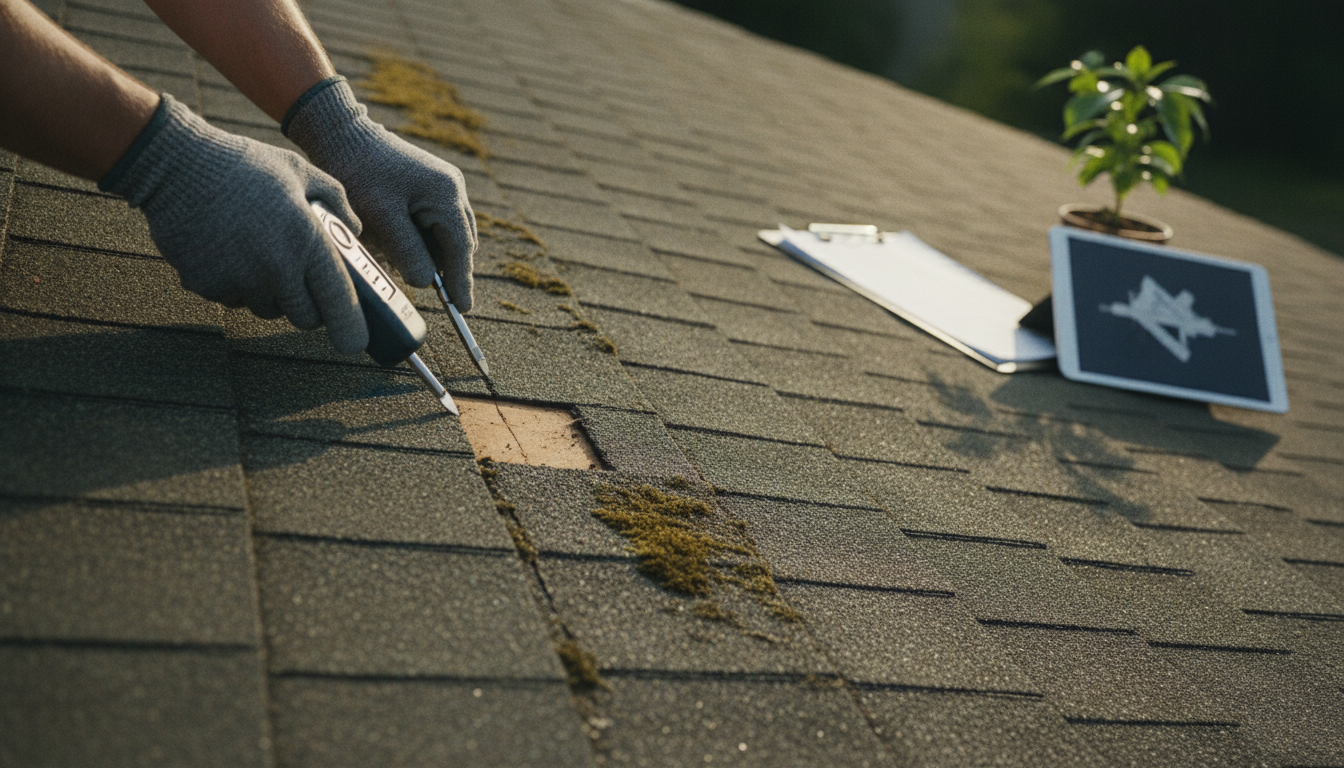
It is vital to distinguish between a roof that looks old and a roof that is failing. Aesthetic aging includes minor fading or the presence of Gloeocapsa Magma (black streaks caused by algae). While these affect curb appeal, they do not necessarily mean the roof is leaking or structurally compromised. Structural indicators of failure that necessitate replacement include:
- Decking Soft Spots: Spongy areas when walking on the roof indicate rot in the plywood.
- Widespread Cupping or Clawing: This indicates the shingle mat has dried out completely and is no longer shed water effectively.
- Internal Moisture Stains: Evidence of water on the rafters or attic insulation.
- Massive Granule Loss: When the “bald” spots on shingles are visible from the ground, the asphalt is exposed and will fail rapidly.
Economic Considerations: Repair vs. Replace
Sometimes, replacing a roof based on age is a poor financial decision. If a 20-year-old roof has one small leak around a chimney, a $500 flashing repair might grant the homeowner another five years of service. However, if the shingles are brittle and cannot be manipulated without breaking, a repair is no longer feasible. This “brittleness test” is a much better indicator for replacement than the age of the roof. If the shingles are still pliable, the roof likely has remaining life.
Insurance and Liability
One caveat to the “ignore the age” rule is insurance. Many insurance carriers are now refusing to underwrite policies for homes with roofs older than 15 or 20 years, regardless of their condition. In these cases, the decision to replace is driven by insurability rather than physical failure. Homeowners must balance the physical condition of the roof with the requirements of their policy to avoid being dropped or moved to an Actual Cash Value (ACV) policy which provides significantly less coverage.
Frequently Asked Questions
1. Can I just install new shingles over my old ones to save money?
While “lay-overs” are legal in some jurisdictions, they are generally discouraged. A second layer of shingles traps heat, shortening the life of the new shingles, and prevents the inspection of the underlying roof deck for rot. It also adds significant weight to the structure.
2. How can I tell if my roof is failing if it doesn’t leak?
Look for signs of “granule sand” in your gutters, shingles that are curling at the edges, or bald spots where the black asphalt is showing through. An attic inspection after a heavy rain can also reveal slow leaks that haven’t yet penetrated the ceiling drywall.
3. Does a North-facing slope last longer than a South-facing slope?
Generally, yes. South-facing slopes receive the most direct sunlight and UV radiation, causing them to age faster. However, North-facing slopes are more prone to moss and algae growth because they stay damp longer.
4. Is it worth paying for a professional roof inspection?
Yes. A professional can perform a ‘brittleness test’ and check the integrity of the flashings and underlayment. This can provide a realistic estimate of the remaining functional life, potentially saving you from an unnecessary $15,000 replacement.
5. How does attic ventilation affect my roof’s warranty?
Most shingle manufacturers will void or significantly limit their warranty if the roof is installed over a space with inadequate ventilation. Proper airflow is essential for the shingles to perform as designed.
Conclusion
In conclusion, while the age of a roof provides a helpful baseline for planning, it should never be the sole factor in a replacement decision. Why Roof Age Alone Shouldn’t Determine Replacement Decisions is supported by the fact that material quality, installation precision, environmental conditions, and maintenance levels all play a more significant role in the system’s actual performance. By focusing on the functional integrity of the roofing system and conducting regular professional assessments, property owners can maximize their investment, ensure the safety of their structures, and avoid the pitfalls of arbitrary replacement schedules. Trust the signs of the roof, not just the date on the calendar.